Safety and rigging · 1 min read
Published 10 November 2026
The aerial safety standard
Voluntary guidance for aerial studios and teachers in India, published by Aerial Community India, from the experience of building and advising aerial studios in India.

1. Scope
This standard sets the minimum that Aerial Community India expects of a studio that teaches aerial yoga or aerial arts in India. It is free to adopt. Studios that confirm they meet it carry a badge on their listing.
The standard applies to any space where people are lifted off the ground by fabric, hoop, sling, trapeze or straps hung from a fixed point: aerial studios, yoga schools that teach aerial, and fitness or movement studios with an aerial programme.

2. Space and ceiling
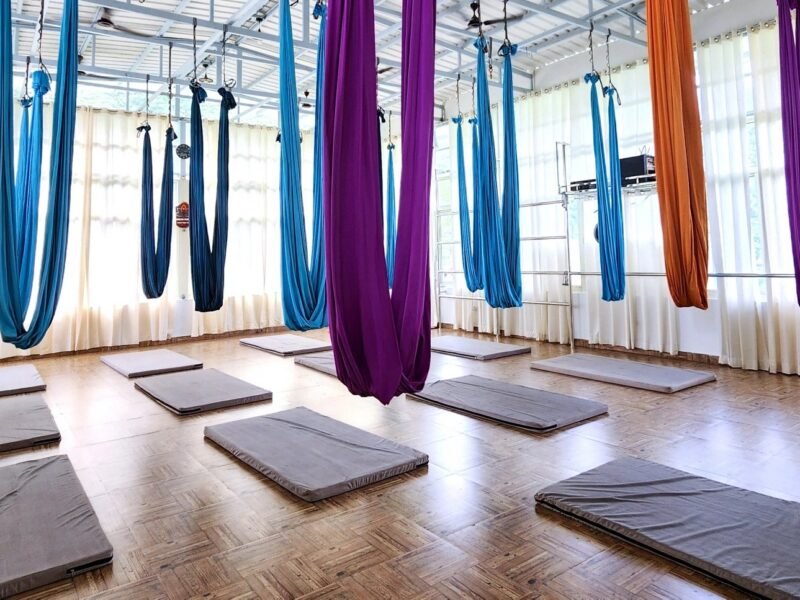
Minimum clear height of twelve feet from floor to rigging point for hammock classes and sixteen feet for silks. Minimum two metres between adjacent apparatus at rest and no obstruction within one metre of the swing arc. Crash mats under every apparatus used for inversions or drops.

3. Rigging
Two independent anchor points per apparatus. The load a point can carry depends on the building, not on the apparatus, so every point must be assessed and installed by a structural engineer or a qualified rigger. No figure published here can replace that assessment. Swivels and carabiners rated and locked. A written inspection log, checked monthly and signed yearly by a competent person. Daily visual check before the first class.

4. Equipment
Fabric replaced on a schedule or when worn, whichever comes first. Equipment logged with purchase date and retirement date. No knots in load-bearing fabric except approved hammock knots. No home-made hardware.

5. Teacher training and supervision
Every class led by a teacher with at least one hundred hours of aerial training on the apparatus taught, and current first aid. Teacher in the room for the whole class. Maximum of eight students per teacher for beginners, twelve for ongoing hammock classes, six for silks and hoop.

6. Students
A health screen before the first class, with named contraindications: pregnancy without clearance, glaucoma, uncontrolled blood pressure, recent surgery. Students under sixteen only in dedicated kids classes with a guardian present. Clear rules on clothing and jewellery, posted and repeated.
7. Emergency procedures
A written plan for a student stuck inverted, for a fall, and for a rigging failure, practised with staff twice a year. First aid kit and a phone in the room. Nearest hospital with an orthopaedic unit named on the wall.

8. Adopting the standard
Tell us through the contact page. We ask for photographs of the rigging and the inspection log, and may visit. The badge is withdrawn if the standard is not kept.
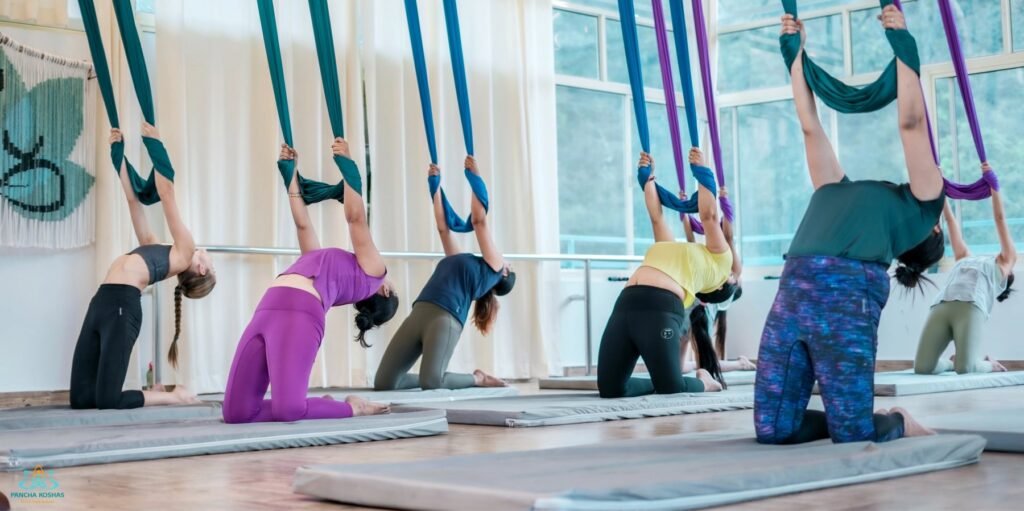
How a studio shows it meets the standard
A studio that has read the standard and believes it meets it says so from its own listing. The page then carries the line this studio states that it meets the Aerial Community India standard, with the date. Aerial Community India does not inspect and does not confirm the statement; the studio makes it and stands behind it.
Not listed yet? Add your studio to the register first.
Who wrote this
Published by Aerial Community India, from the experience of building and advising aerial studios in India.
It will be revised as practice changes. Corrections and challenges are welcome at info@aerialcommunityindia.com.
Published 10 November 2026.